

Vibe coding refers to the sensation of being hooked to produce something via an LLM without the discipline of quality software engineering. With explorers surfacing new tools and workflows for agentic engineering, there is equal potential for vibe architecture. As software engineers make the migration to the agentic, it’s as important as ever to comprehend what goes into a sound agentic architecture. This article is pitched as a high-level introduction to the principles involved in evaluating agentic architecture.
An example of vibe architecture would be immediately moving to a multi-agent architecture for a project because of the buzz around it. However, it’s helpful to ask ourselves why there would be any need for this when LLMs are powerful on their own. What value does an agentic architecture truly add?
In a case study, Anthropic explored multiple agents to create a research system.
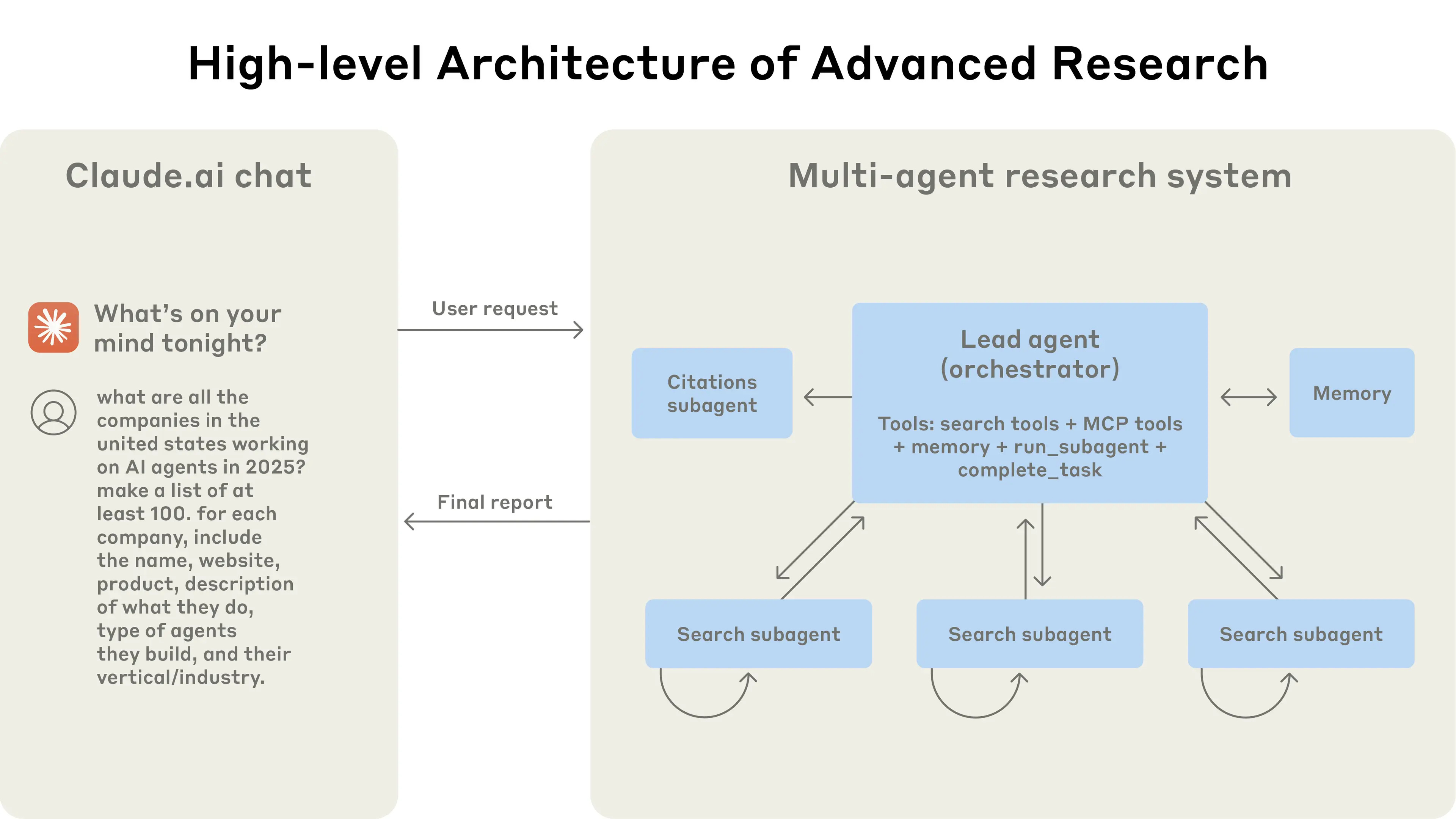
Why is there a need to break out the task of searching and checking citations into separate agents when presumably a single LLM has the potential to do such?
The same question could be asked of humans, but experience tells us that having multiple researchers working side-by-side may produce better results than researching being carried out by a single individual. This is the answer provided in Anthropic’s case study.
A more general answer is that whereas LLMs can produce high-quality responses, they lack the multi-step processing needed to solve real-world problems. Their responses are not shallow, but their inability to press beyond an immediate response, interact externally, and make dynamic decisions limits their effectiveness.1
In a word, there are some tasks that benefit from greater width, such as having researching agents running in parallel. On the other hand, when a task benefits from multiple workers working sequentially (i.e., building of each other’s work), a multi-agent workflow can provide depth depth. The trick to mastering a multi-agent workflow, then, is knowing whether a task’s execution may be optimized by adding the fitting ratio of width and depth. Width-depth discernment, then, is foundational to forming a sound agentic architecture. Optimal performance, however, is limited to what one can afford. Putting it together, the chief aim for a multi-agent architecture is to deploy agents horizontally and vertically to optimize performance within budget.
As soon as we introduce a team of agents with horizontal and vertical relationships, arrive at something familiar to us:
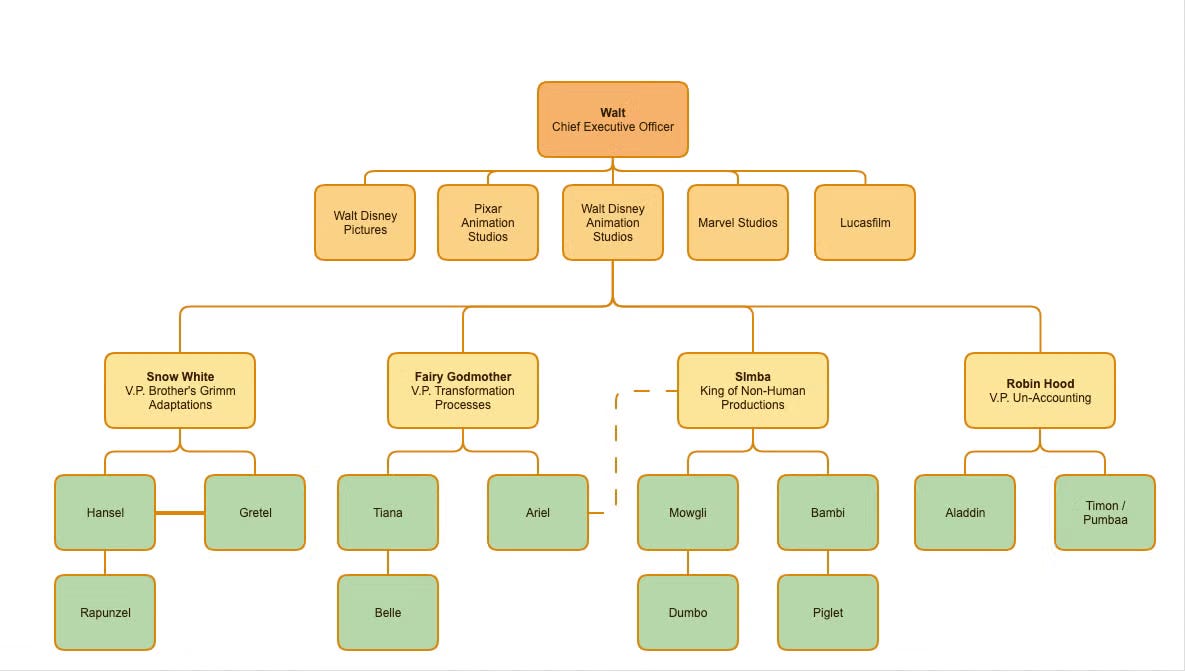
As soon as we have width and depth via multiple agents, we have an organization. Once we make this connection, we can draw analogies from human organizations to consider some additional tradeoffs in designing agentic ones.
History tells us that there is value in planning the structure of organizations upfront, as well as dynamically adapting an organization for changing circumstances.
For logistical reasons, the formation of Roman cohorts needed to known and strategically arranged before battle. However, Alexander the Great would gain real advantage against the Persians when rearranging the pre-decided formation based on a real-time read of the battlefield.
Napoleon’s brilliance on the battlefield was in large part due to his corps system. Armies were broken down into autonomous units that could each have their own dynamism due to the strong degree of trust in a shared military doctrine between Napoleon and his marshals.
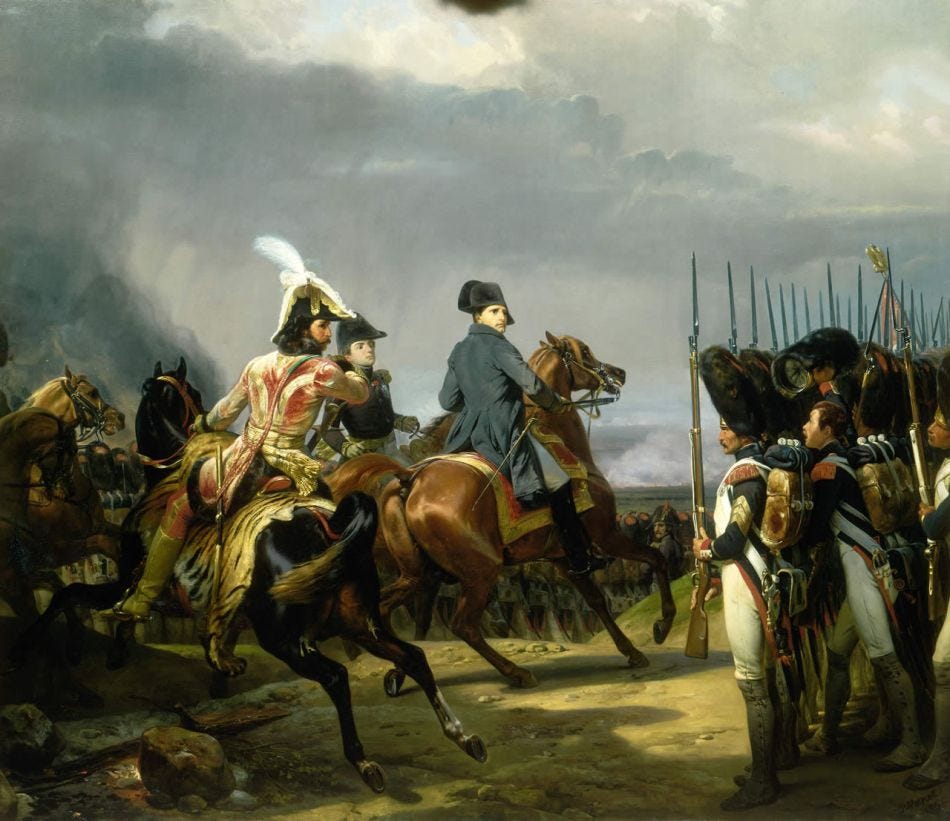
Likewise, agentic organizations also have the potential to discern the proper width-depth ratio both upfront and ad hoc.
So far, I use these historical examples as illustrations to remind us that perfecting an organization—whether human or agentic—is both an art and a science. It is tactical, dynamic endeavor, and there is not one universal approach; yet, there are patterns for success.
With these illustrations in our imagination, we can begin to explore the tactical tensions in the race to architect agent organizations that are analogous to examples in human history. I’ll begin by continuing the upfront and ad hoc tension in shaping agentic organization, and, in the future, introduce other tactical tensions that involve the coordination, communication, and execution within those organizations.
Mapping the upfront and ad hoc tension to emerging agentic architecture, Claude Code allows for an agentic structure to take shape at runtime, whereas LangChain emphasizes defining the structure upfront. Meaning Claude Code leverages agents to dynamically determine the cost-performance optimization (getting the optimal width-depth ratio within budget) at runtime. LangChain leverages humans to determine ahead of time how agents should be structured for cost-performance optimization.
Here, we have two levels of considerations:
Human vs. agent determination — Should humans or agents be trusted with optimizing for cost and performance? And if the answer is both, then what is the precise division of responsibilities?
Timing — Should agent organizations structure at runtime, or should they be structured upfront? And if the answer is both, then what does it look like to stitch this together?
Predictability may be a tradeoff here. For example, perhaps defining organizational structures upfront produces more predictability with respect to behavior, cost, and performance, giving LangChain an edge. Or, perhaps shaping organizational structures dynamically gives an edge for cost-performance optimization, but things are less predictable. Or, maybe either approach can attain predictability and cost-performance optimization, but the consideration becomes the maintainability and training cost. In summary, cost, performance, and predictability seem to be the essential considerations, and the architectures being developed may not prioritize them equally.
These tradeoffs will impact the architecture of the tools that emerge for building agent organizations, such as Claude Code and LangChain. Moreover, these tradeoffs will impact which tool a particular software application prefers to leverage (and how exactly they leverage it).
In coming articles, I plan to go into further detail into the possible organizational structures of the tools, and how their potential weighs against the tradeoffs of predictability, cost, and performance. Then, I will explore how particular software applications may want to leverage those tools based on their own interests with respect to those same tradeoffs.
For now, we can conclude having established:
The reason for introducing agentic architecture
The definition of optimal agentic architecture as the finding of the proper width-depth ratio within budget
The illustration of analogous human organizations—like military ones—and their structures, workflows, and tradeoffs
The design choice of shaping organizations at runtime or a priori (i.e., ahead of time).
The design choice of what to trust humans with and what to trust agents with for an ideal organization.
The tradeoffs of predictability, cost, and performance that will be considered throughout
In summary, like calvary, we have scouted the contours of the emerging agentic architecture.
On a final note, while the connection between an upfront agentic architecture and human organizations is helpful (in my judgment), it becomes critical to avoid anthropomorphizing agents. It is also critical not to reduce our humanity to the agentic. As a philosopher, I share the conviction of being philosophically accurate and ethically responsible with respect to our magnifica humanitas. As an engineer, I also see the architectural problems should we conflate humans with agents. We will not get a multi-agent research system correct if we assume that agentic roles should applied toward a task in a one-to-one fashion as humans. Evaluation can happen when the precise differences between humans and agents are apprehended.
And the best way to ensure humans are known anthropomorphically, and that agents are not anthropomorphized, is to develop a distinct agentology—a philosophical understanding of agents as such. Regarding anthropology, I have written at length elsewhere. Regarding agentology, I will form thoughts as we go to help inform our more technical explorations.
If you’re interested in following this series which aims to provide cutting-edge insights about agentic architecture, and the deeper principles that drive them, consider subscribing and sharing.
https://aman.ai/primers/ai/agentic-design-patterns/#why-are-agentic-systems-needed